
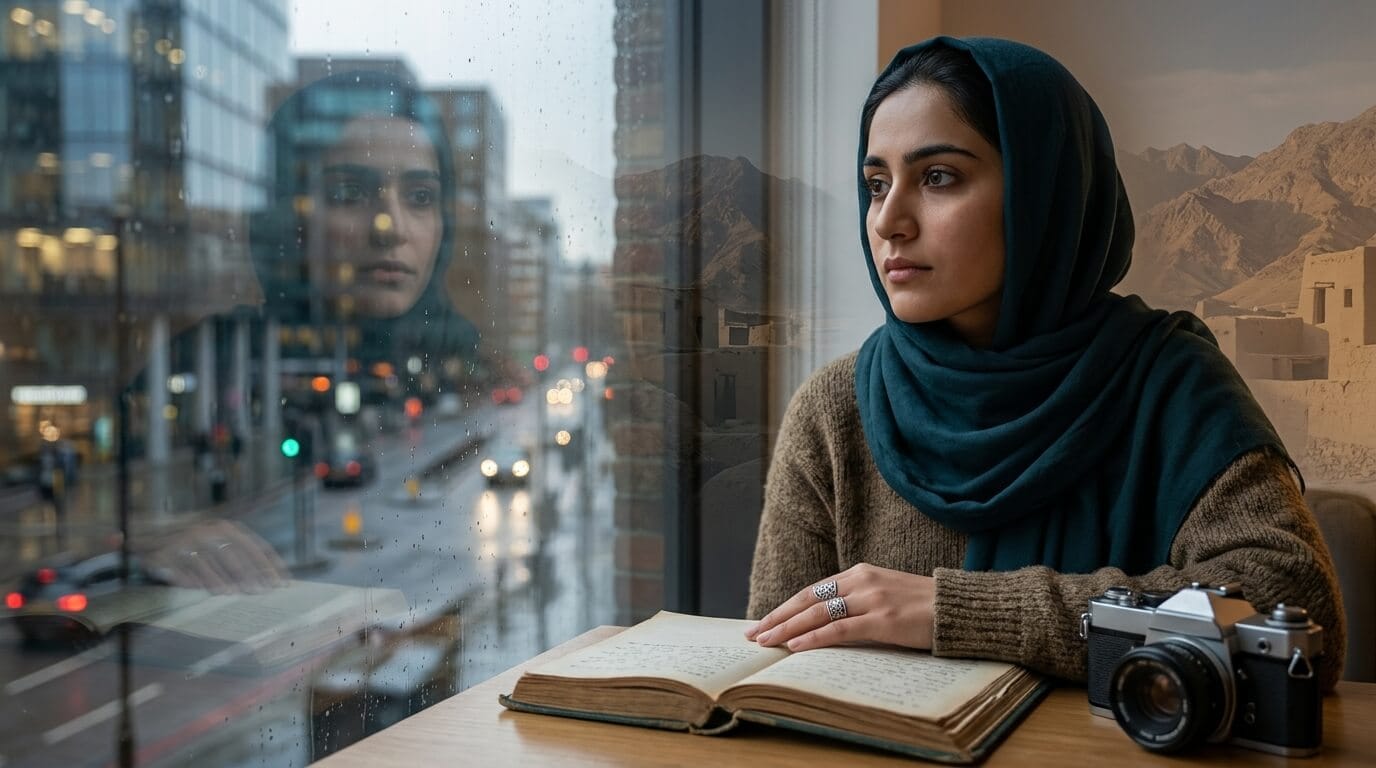
Exile is often described as escape. A moment of survival. A crossing from danger into safety. But for many Afghan women forced to flee their country, exile is not an ending. It is the beginning of a different kind of struggle.
Leaving home rarely happens with closure. It happens quickly, violently, and incompletely. Families separate. Careers vanish. Languages suddenly become barriers. Entire identities are suspended between memory and uncertainty.
For journalists, activists, students, and professionals who escaped Afghanistan after the Taliban takeover, survival often came with guilt. Guilt for leaving parents behind. Guilt for surviving when others could not. Guilt for rebuilding life while friends remain trapped under restrictions and fear.
The emotional reality of exile is rarely visible online. Social media often reduces displacement to airport photos, visa approvals, or political headlines. But the deeper experience is quieter and far more complex.
Exile changes the relationship people have with time.
Many Afghan women living abroad describe feeling emotionally divided between two worlds. Physically present in one country while mentally remaining connected to another. They continue monitoring news from Afghanistan daily, checking on relatives, translating trauma into activism, and carrying the pressure of representing an entire crisis to the outside world.
This burden is exhausting.
At the same time, exile has also created new forms of solidarity and resistance. Afghan women journalists, artists, researchers, and organizers continue building independent platforms outside the reach of Taliban censorship. Podcasts, documentaries, online education projects, and investigative reporting initiatives are preserving voices that might otherwise disappear from public record.
Women For Women was created from this reality.
Not from distance, but from continuity.
Exile did not separate these women from Afghanistan. In many ways, it intensified their responsibility to speak, document, and remember. The stories shared through this platform are not only reflections on suffering. They are also acts of preservation against forgetting.
Authoritarian systems often rely on exhaustion. They wait for the world to lose interest. They wait for silence to become normal.
But memory itself can become resistance.
The voices of Afghan women continue to cross borders even when their freedoms cannot. And every story shared publicly challenges the idea that oppression can erase identity completely.
Exile changes lives.
But it does not end the story.